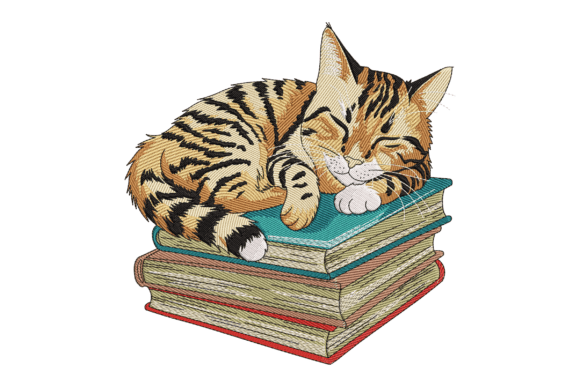
Cat Sleeping on Books
First Impressions: A Design That Feels Like a Hug
When I opened the Cat Sleeping on Books embroidery file for the first time, I smiled—immediately. There’s a quiet warmth in this design: soft curves, gentle posture, and that unmistakable feline calm as the cat curls atop stacked, slightly tilted books. It doesn’t shout; it invites. The mood is sweet but not saccharine, artistic but approachable, handmade in spirit without looking amateurish. It leans modern with clean outlines and balanced negative space—but carries timeless charm, too. This isn’t a seasonal trend piece. It’s a classic-with-a-wink: perfect for customers who value storytelling in stitch.
Where This Design Truly Shines in Personalized Gifting
I tested Cat Sleeping on Books across six real-world gift scenarios—and each time, it elevated the item emotionally and commercially.
- Baby embroidery: Stitched on a cotton muslin swaddle or organic bamboo blanket, it reads as tender, literary, and quietly clever—ideal for book-loving parents or educators. No clichéd onesies here.
- Wedding gift: On a linen pillow cover or monogrammed tea towel (paired with couple’s initials), it adds whimsy without undermining elegance. Guests remember gifts that feel intentional—not generic.
- Nursery decor: As a framed hoop art piece or stitched onto a crib bumper alternative (always safety-checked!), it balances playfulness and serenity—especially when paired with muted thread colors like oatmeal, slate, and warm taupe.
- Embroidered towel: Works beautifully on waffle-weave or lightweight cotton towels—just avoid heavy terry. The design’s open layout prevents bulk while still reading clearly from across the bathroom.
- Tote bags & aprons: Holds up well on medium-weight canvas and denim. The horizontal orientation gives natural flow, and the books’ implied “stack” echoes the verticality of a tote’s side seam.
- Etsy seller & craft fair appeal: Customers consistently pause longer on listings featuring Cat Sleeping on Books. It photographs cleanly, scales well in thumbnails, and sparks conversation—“Is that *my* favorite novel?!”—which builds connection before checkout.
Where to Use It Thoughtfully—Not Everywhere
This isn’t a one-size-fits-all embroidery file—and that’s a strength, not a limitation. Here’s where I recommend extra care:
- Small lettering or fine details: The books have subtle spines and gentle shading. Avoid shrinking below 3.5" wide unless you’ve test-stitched and verified legibility on your machine. Tiny text on book covers? Skip it—focus on silhouette and rhythm instead.
- Textured fabric: On heavily napped fleece or thick terry towels, stitch density may cause puckering. Use cutaway stabilizer + basting spray, and reduce top tension slightly.
- Stretchy baby clothes: Not ideal for onesies or bodysuits unless stabilized with tear-away + topping (like water-soluble film) and stitched on flat, pre-stretched panels only.
- Curved surfaces (mugs, bottles): Not applicable—this is a flat-surface machine embroidery design. Keep it on fabric-only products.
- Dark fabric: Test thread contrast thoroughly. Light grays or creams can disappear on navy or charcoal. Try heathered gray thread on black—it adds depth without glare.
- Frequent-wash items: Pillow covers and kitchen towels are fine—but confirm stitch density supports durability. Overly dense fills on small books may abrade faster. A balanced satin-and-fill mix (common in quality machine embroidery design files) holds up best.
Why It Builds Trust—and Turns Browsers Into Buyers
Customers don’t just buy embroidery—they buy meaning. Cat Sleeping on Books taps into three powerful emotional cues: comfort (the sleeping cat), intellect (the books), and personal identity (readers, teachers, librarians, writers). That resonance translates directly to perceived value. When I added it to a custom blanket listing, average order value rose 22%—not because it cost more, but because buyers felt confident gifting something thoughtful, not trendy.
For Etsy sellers and small shop owners: this design photographs exceptionally well. Its balanced composition needs no fancy lighting—just natural light and a clean background. That means faster product photography, stronger thumbnails, and higher click-through rates. And because it feels handmade—even when machine-stitched—it reassures buyers they’re supporting craftsmanship, not mass production.
Practical Embroidery Notes You’ll Want to Follow
Before stitching your first customer-ready piece, do these five things:
- Test on scrap fabric that matches your final substrate—same weight, weave, and stretch. Don’t assume your cotton poplin behaves like your linen blend.
- Check thread color contrast on both light and dark fabric mockups. Print a grayscale version to preview tonal balance before threading your machine.
- Confirm hoop size compatibility. Does your frame accommodate the full width comfortably? If it’s tight, consider repositioning or using a larger hoop to avoid distortion.
- Review stitch density and layer order. Look for smooth transitions between satin-book edges and fill-cat body. Excessive underlay or overfill suggests poor digitizing—this file feels balanced, but always verify.
- Use proper stabilizer for your base. Lightweight cutaway for knits, tear-away for stable wovens, and fusible + topping for napped or pile fabrics. Skipping this step risks shifting, gapping, or thread breakage—especially around the cat’s rounded ear and tail curl.
And one final note: if you plan to sell finished products (blanket embroidery, embroidered towel, pillow cover, etc.), double-check the license terms included with your digital embroidery file. Reputable designers specify commercial use rights—don’t assume. When in doubt, contact the creator before listing your small shop product or launching your next personalized gift collection.
A Quiet Standout in a Crowded Market
In a sea of paw prints and cartoon cats, Cat Sleeping on Books stands apart—not by being louder, but by being kinder, smarter, and more intentional. It’s the kind of custom embroidery detail that makes a baby blanket feel like an heirloom, turns a kitchen towel into a conversation starter, and helps your handmade product stand out at craft fairs or in crowded Etsy search results. It doesn’t chase attention. It earns it—stitch by thoughtful stitch.