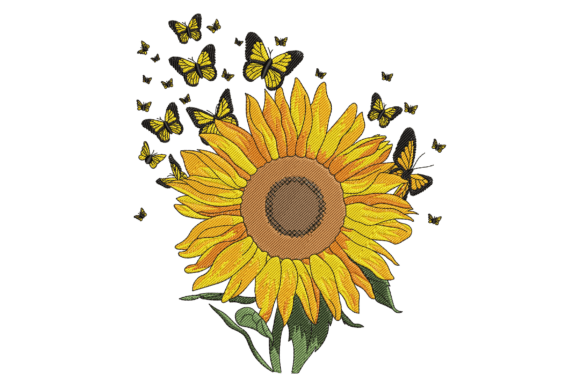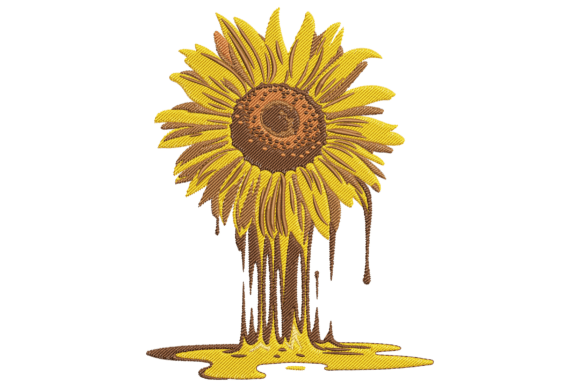
Melting Sunflower: A Seasonal Embroidery Design Review
First Impressions: Whimsy with Warmth, Not Just Another Sunflower
As an embroidery designer who’s built seasonal collections for over a decade, I approach every new design like a product planner—not just an artist. Melting Sunflower immediately stands out in the Single Flowers category because it avoids cliché. It doesn’t shout “summer” or “farmhouse”—it whispers “golden hour,” “cozy gathering,” and “quiet celebration.” The melting effect isn’t chaotic; it’s soft-edged, slightly fluid, and full of gentle movement. That gives it surprising versatility across holidays: think Easter brunch linens, Mother’s Day aprons, July 4th tote bags, autumn porch pillows, or even minimalist Christmas ornament accents.
The emotional tone is warm, approachable, and quietly confident—neither overly cute nor stiffly formal. It reads as handmade but polished, nostalgic but fresh. For Etsy sellers and small shop owners, that balance is gold: it attracts scroll-stopping attention without alienating buyers seeking substance over sparkle.
Real-World Holiday & Seasonal Use Cases
Melting Sunflower thrives where personality meets practicality. Here’s how it performs in high-intent holiday selling scenarios:
- Sweatshirt embroidery: Centered on oversized crewnecks or cropped styles, it reads beautifully at 3.5–4.5 inches—ideal for family matching sets (think “Mom,” “Dad,” “Kids” with coordinated sunflowers).
- Tote bag design: Works especially well on natural canvas or linen-blend totes. Paired with simple typography (“Grow Joy,” “Sunshine Delivered”), it becomes a best-selling handmade gift for teachers, gardeners, or new parents.
- Kitchen towel embroidery: Positioned near the hanging loop or corner, it adds charm without compromising function. Its open, airy stitch layout avoids stiffness—even after repeated washing.
- Pillow cover & table linen accents: On neutral linen or oatmeal cotton, Melting Sunflower elevates everyday home decor into curated seasonal moments—perfect for Instagrammable holiday staging or craft fair displays.
- Embroidered patch: Digitized cleanly, it transfers beautifully to iron-on or sew-on patches. Great for back-pocket details on denim jackets or as a subtle accent on baby blankets and bibs.
- Personalized gift layering: Pair it with monogrammed initials or a short date (“Est. 2024”) beneath the bloom—ideal for wedding favors, baby showers, or anniversary kitchen bundles.
For social media previews and printable mockups, its distinctive silhouette ensures instant visual recognition. No need for heavy filters or busy backgrounds—it holds attention on its own. That consistency strengthens brand trust during peak holiday shopping, when customers skim dozens of listings per minute.
Where to Use Melting Sunflower Thoughtfully
This isn’t a “set-and-forget” design. Its charm lies in intentionality—so here’s where caution matters:
- Hoop size & detail level: Avoid shrinking below 2.75 inches. Smaller sizes lose the melting nuance and risk thread crowding—especially on dense fabrics like terry cloth or thick towels.
- Fabric texture & stability: On stretchy knits (e.g., lightweight sweatshirts), use cutaway stabilizer + basting spray. Skip it on highly curved surfaces like baseball caps unless you’ve tested the digitization for distortion.
- Dark fabric & metallic thread: While lovely in gold or copper metallic on navy or charcoal, test first. The melting edges can blur if stitch density is too high or tension isn’t calibrated.
- Repeated washing: Recommend polyester or rayon threads—not cotton floss—for kitchen towels or baby items. Reinforce backings on high-friction zones (like towel hems) to preserve longevity.
Seasonal Appeal, Emotional Resonance & Product Value
Holiday shoppers don’t buy stitches—they buy feeling. Melting Sunflower taps into universal emotional anchors: warmth, growth, resilience, and gentle transformation. That makes it unusually flexible across celebrations—less tied to one date, more aligned with mood. For a small business owner building a cohesive seasonal shop collection, that means fewer designs needed to cover multiple holidays.
It also boosts perceived value. Unlike flat, symmetrical florals, its asymmetry and implied motion suggest craftsmanship and care—key drivers for customers choosing handmade gifts over mass-produced alternatives. When bundled (e.g., embroidered towel + matching apron + printed recipe card), it feels intentional, not assembled. That cohesion builds customer trust and encourages repeat purchases year after year.
Practical Designer Notes for Sellers & Crafters
Before adding Melting Sunflower to your next seasonal drop, run these checks:
- Test thread colors on both light and dark fabric. What reads as golden-yellow on white may vanish on cream—or pop unexpectedly on olive green.
- Review stitch density. If your machine embroidery design feels heavy or causes puckering, reduce density by 5–8% before production runs.
- Confirm hoop size compatibility. Does it fit comfortably in your most-used hoop? If not, adjust placement—not scale—to preserve integrity.
- Match stabilizer to fabric type. Tear-away for stable wovens; cutaway for knits or towels; water-soluble for delicate overlays.
- Create realistic mockups. Use actual fabric swatches—not just digital previews—to assess how light interacts with the melting edges.
- Inspect small details post-stitch. Check petal transitions and stem taper under magnification. Clean finishing separates professional from amateur.
- Plan a cohesive color palette. Build your entire holiday collection around 3–4 thread colors pulled from Melting Sunflower—then extend them to packaging, tags, and social graphics.
- Verify commercial licensing. Before selling finished products (e.g., embroidered pillow covers on Etsy), confirm your digital embroidery file includes rights for commercial embroidery use.
For apparel decorators, handmade gift makers, and holiday-focused Etsy sellers: Melting Sunflower isn’t just another flower. It’s a quiet differentiator—a seasonal embroidery design that balances artistry with wearability, whimsy with warmth, and simplicity with distinctiveness. Used thoughtfully, it turns everyday items into meaningful moments—and that’s exactly what holiday shoppers remember.