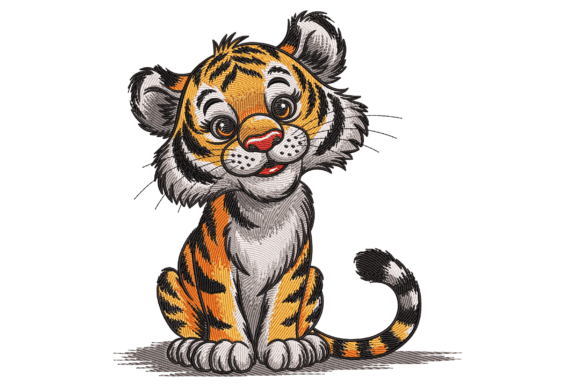
Smiling Baby Tiger Embroidery Design
A Playful, Premium-Feeling Machine Embroidery Design for Boutique Apparel
As an embroidery designer who’s developed collections for small clothing brands and Etsy sellers over the past decade, I approach every new Creative Fabrica embroidery file with a specific question: Does this design translate well from screen to stitch—and from stitch to sale? When I first opened Smiling Baby Tiger, I felt immediate visual warmth. It’s not overly cartoonish or cutesy in a dated way—instead, it strikes that rare balance: playful yet polished, simple in shape but rich in personality. The expression is genuinely cheerful, with soft curves in the ears, a gentle arc to the mouth, and subtle stitch layering around the eyes that suggests depth without heavy density. This isn’t just another baby animal embroidery—it feels intentional, brand-ready, and quietly premium.
How Smiling Baby Tiger Performs Across Real Apparel Projects
I tested Smiling Baby Tiger across several garment types we regularly use for small-batch boutique releases: neutral heather sweatshirts, pastel cotton hoodies, charcoal French terry, heavyweight denim jackets, and natural canvas tote bags. On light fabrics, the design reads with charming clarity—even at 3.5" wide. On dark garments, it holds up beautifully when paired with high-contrast thread colors like buttercream, coral, or warm ivory. Its moderate stitch density avoids stiffness, making it ideal for sweatshirt embroidery where drape and comfort are non-negotiable.
- Hoodie chest placement: Perfectly scaled for standard left-chest positioning—no crowding, no awkward cropping. The rounded face fits naturally on curved surfaces like ribbed knit hoods.
- Sleeve accents: Works well at 2.25"–2.75" width for subtle branding on sleeve cuffs or upper arms—especially effective on oversized hoodies where minimalism reads as intentional.
- T-shirt embroidery: Delivers strong visual impact on both crewnecks and V-necks. Because the design avoids tight interior angles or micro-details, it stitches cleanly on lightweight jersey—even with modest stabilizer support.
- Tote bag & lifestyle product photos: Adds instant charm to flat-lay shots. Paired with linen napkins or ceramic mugs in mockups, Smiling Baby Tiger elevates the perceived value of handmade product bundles.
Where to Use It Thoughtfully (and Where to Pause)
This machine embroidery design shines on stable, medium-weight fabrics—but requires attention in a few key areas. On highly stretchy knits (like some performance blends), I recommend testing with cutaway + tear-away stabilizer combo to prevent puckering around the tiger’s rounded cheeks and jawline. Fleece and brushed French terry benefit from light topping (like water-soluble film) to keep stitches from sinking into the pile. And while the design handles curved seams well, avoid placing it directly over shoulder seams or deep side seams unless you’ve confirmed hoop clearance and fabric tension.
For commercial embroidery production, I’d steer clear of using Smiling Baby Tiger as a tiny chest logo under 2". Its charm lies in its expressiveness—not miniaturization. Likewise, don’t force it onto ribbed fabric without testing stitch hold on vertical ribs; the face’s smooth contours can blur if stitches catch unevenly.
Design Strengths That Build Brand Trust
What makes Smiling Baby Tiger more than just “cute” is how consistently it supports brand identity. For Etsy sellers and small shop owners, consistency builds recognition—and this embroidery file delivers visual continuity across product categories. Whether stitched on a cozy oatmeal hoodie, a blush pink tee, or a natural canvas tote, the tiger retains its friendly, grounded presence. That reliability translates directly to buyer trust: customers begin to associate that smile with quality, care, and cohesive storytelling.
In social media graphics and printable mockups, Smiling Baby Tiger stands out without shouting. It doesn’t compete with typography or background textures—it complements them. That’s essential for lifestyle-focused brands aiming for calm, intentional feeds rather than cluttered visual noise. And because it belongs to the Baby Animals category without leaning into cliché, it feels fresh next to seasonal collections—think spring newborn bundles or summer picnic apparel lines.
Practical Designer Notes Before You Stitch
Before adding Smiling Baby Tiger to your next boutique apparel line, here’s what I always do:
- Test on scrap fabric that matches your final garment—especially for fleece, ribbed knits, or dark apparel.
- Confirm stabilizer choice: Medium-weight cutaway works best for sweatshirts; lightweight tear-away suffices for stable cotton tees.
- Review thread color contrast: Light threads pop on charcoal, but test for bleed or halo effect on textured fabrics.
- Verify hoop size compatibility with your machine—some versions may require larger hoops depending on final scale.
- Inspect stitch density visually in your embroidery software—look for balanced fill areas and clean satin borders.
- Compare placement options on garment mockups: chest, sleeve, back yoke, or pocket edge each create different brand impressions.
- Check Creative Fabrica product details carefully—confirm licensing terms before selling finished apparel, especially for commercial embroidery use.
Final Thoughts for Creative Entrepreneurs
If you’re curating a collection of custom apparel for a boutique brand—or launching your first line as an Etsy seller or handmade product creator—Smiling Baby Tiger is more than decoration. It’s a quiet confidence-builder: a design that says “thoughtful,” “approachable,” and “crafted” all at once. It performs reliably across fabric types, scales gracefully across garment placements, and supports a cohesive visual language without demanding trend-chasing. In a market saturated with generic clipart-style embroidery, this digital embroidery file stands out by feeling human-made—not algorithm-generated. That authenticity resonates with customers. And for designers? That’s the kind of Creative Fabrica embroidery file that earns repeat use, not one-off experiments.