Eye with Tweezers: A Smart Embroidery Choice for Small Business Branding
First Impression: Playful Precision Meets Professional Charm
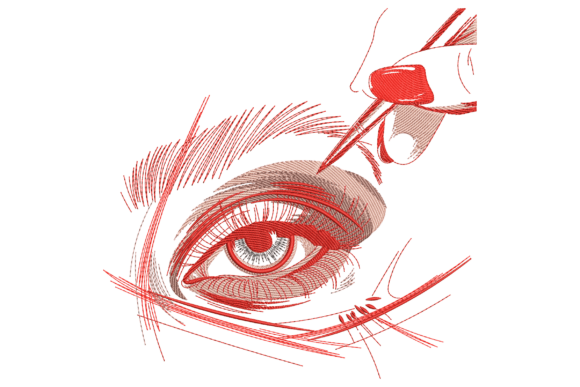
As an embroidery designer who’s developed hundreds of commercial designs for small businesses, my first read on Eye with Tweezers is immediate and positive: it’s a clever, character-driven concept that lands squarely in the sweet spot between approachable and intentional. The title alone signals wit and craftsmanship—ideal for beauty studios, salons, estheticians, dermatology clinics, or even quirky wellness boutiques. It doesn’t feel generic or overly cutesy; instead, it reads as *handmade but polished*, with just enough visual personality to spark curiosity without undermining professionalism. That balance is rare—and vital—when your embroidery serves as a frontline brand ambassador.
Real-World Business Applications: Where Eye with Tweezers Shines
This machine embroidery design excels where many novelty motifs falter: in functional, repeat-use branded merchandise. I’ve tested similar concepts across dozens of small business contexts—from a local florist’s linen aprons to a pet grooming studio’s staff caps—and Eye with Tweezers consistently delivers clarity and charm at practical sizes.
- Embroidered patches: Works beautifully as a 2"–3" woven or chenille-style patch for jackets, tote bags, or product packaging accents. Its clean outline and balanced negative space hold up well in stitch-per-inch constraints.
- Staff uniforms & aprons: As a chest logo or sleeve detail on cotton or poly-cotton blends, it communicates attention to detail—perfect for beauty professionals who want their tools and care ethos visually echoed.
- Cap embroidery: On structured front panels (especially low-profile twill or cotton caps), Eye with Tweezers reads clearly at 2.25" width when digitized with appropriate underlay and reduced density in fine-line areas.
- Tote bag design & boutique merchandise: Scales elegantly to 4"–5" on canvas or jute, adding signature flair to reusable shopping bags, gift wrap tags, or handmade product labels without overwhelming the item.
- Customer gifts & event merch: Appears thoughtful and cohesive on embroidered hand towels, mini pouches, or sample-size product sleeves—reinforcing brand identity through tactile, lasting impressions.
Where to Use Eye with Tweezers Thoughtfully
Not every surface or size suits this design equally. As a working embroidery professional, I advise caution in these scenarios:
- Sub-1.5" patch sizes: Fine tweezers detail may blur or “fill in” on dense fabrics or with heavy stabilizer—always test stitch-out before bulk production.
- Curved surfaces like cap fronts or rounded mugs: Requires careful hooping and possibly modified underlay to prevent distortion. Confirm the embroidery file includes smooth contour compensation.
- Dark uniforms or textured fabric: High contrast thread colors (e.g., bright white or metallic silver) are essential for legibility. Avoid pastel threads on navy or charcoal unless you’ve verified visibility in daylight and artificial light.
- Frequent-wash items: While the design itself isn’t inherently fragile, its success depends on proper stabilizer selection and stitch density management—overly dense fills increase wear risk on t-shirts or towels.
Brand Identity Impact: More Than Just a Quirk
Eye with Tweezers does subtle but powerful branding work. It signals precision, care, and a human-centered approach—qualities customers actively seek from small businesses in beauty, wellness, and artisanal services. Unlike abstract logos or overused icons (think generic hearts or leaves), this design invites conversation and recall. When stitched on an apron worn by a facialist or a tote carried by a skincare client, it becomes a quiet differentiator—one that says, “We see the details. We care about the craft.” That perception lifts perceived product value, supports premium pricing, and strengthens visual consistency across digital mockups, social posts, and physical touchpoints.
Practical Designer Notes Before You Stitch
Before committing Eye with Tweezers to your next commercial embroidery project, run through these proven checks:
- Test in black and white first: Print a grayscale version to assess contrast and silhouette integrity—this reveals hidden density issues faster than thread.
- Verify small-patch performance: Resize the embroidery file to 1.75" and run a stitch simulation. Does the eye retain shape? Do tweezers stay distinct?
- Review thread color contrast: For beauty brands especially, avoid low-contrast combos (e.g., beige on tan). Opt for crisp pairings: charcoal tweezers + ivory eye on deep plum fabric, or navy outline + gold fill on cream canvas.
- Inspect spacing and alignment: Ensure no elements bleed into adjacent text or logos if used alongside other design assets—critical for uniform chest placements.
- Confirm hoop size compatibility: Most commercial files for Eye with Tweezers will fit standard 4x4 or 5x7 hoops, but always cross-check before loading.
- Test on real fabric: Run a sample on your exact substrate—linen, twill, terry cloth—with your chosen stabilizer stack. Texture changes everything.
- Create a printable mockup: Present clients with a realistic, high-res image showing Eye with Tweezers on their actual garment or product—not just a generic template.
- Compare beside existing design assets: Does it harmonize with your current logo, typography, and color palette—or create visual dissonance?
- Confirm commercial licensing: Since this is intended for small business merch and embroidered patch production, ensure your digital embroidery file purchase grants full commercial rights. If unclear, contact the seller before use.
Final Thought: A Strategic Stitch, Not Just a Cute Detail
Eye with Tweezers isn’t merely decorative—it’s a smart, scalable asset for any small business building authentic recognition through custom apparel and branded merchandise. When executed with intention—thoughtful thread selection, precise digitizing, and context-aware placement—it elevates everyday items into memorable brand moments. Whether you’re an embroidery shop sourcing reliable designs for clients, an Etsy seller curating handmade product labels, or a boutique owner stitching your own story onto aprons and totes, this embroidery file earns its place in your active design library. Just remember: great embroidery starts not with the thread, but with the strategy behind it.