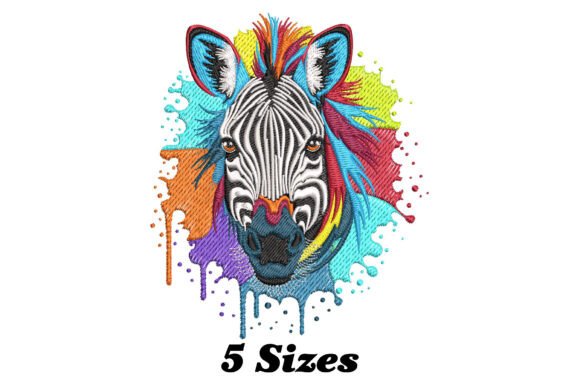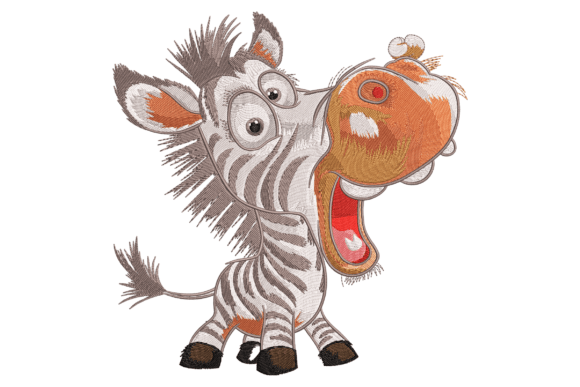
Crazy Zebra Embroidery Design
First Impression: Playful Charm That Stops Booth Walkers in Their Tracks
As an embroidery designer who’s prepped over 200 craft fair booths—from snowy Vermont markets to sun-drenched California pop-ups—I know exactly what makes a design *land* with shoppers. Crazy Zebra hits that sweet spot: bold enough to catch the eye from six feet away, but soft and whimsical enough to feel inviting, not loud. It’s not rustic, not minimalist, not elegant—it’s playful charm, pure and simple. That tone is gold for handmade product displays where warmth and personality drive impulse buys. Customers don’t pause for “sophisticated” at 10 a.m. on a Saturday—they pause for something that makes them smile. Crazy Zebra does that instantly.
Where Crazy Zebra Shines in Real Craft Fair Products
This Wild Animals–themed machine embroidery design thrives where character meets utility. On a natural canvas tote bag? Perfect—centered above the pocket or scaled large across the front, it reads clearly even from across the aisle. On an apron? Ideal for the chest pocket or lower left corner—its asymmetry and lively lines complement the wearer’s movement without overwhelming the silhouette. For tea towel embroidery, Crazy Zebra works best as a medium-scale motif (4–5 inches wide) placed just above the hem—clean, giftable, and photogenic for Etsy sellers building cohesive kitchen collections.
It also excels as an embroidered patch—especially when backed with iron-on adhesive and offered as a DIY add-on. Craft fair shoppers love customizing their own bags or jackets, and Crazy Zebra’s friendly energy translates beautifully into a sew-on or iron-on format. On fabric pouches and small pillow covers? Yes—but keep it centered and sized between 3–4 inches. Too small, and the zebra’s expressive face loses definition; too large, and it crowds the item’s proportions. Caps? Use caution: the design’s balanced shape holds up well on flat-front panels, but avoid curved crowns unless you’ve tested stitch pull and thread tension thoroughly.
What Makes Crazy Zebra a Smart Handmade Product Investment
Three things make Crazy Zebra commercially smart: clarity at a glance, scalability, and emotional resonance. At craft fairs, buyers scan fast. Crazy Zebra communicates its theme instantly—no decoding needed. It’s recognizable as a zebra, yet stylized enough to feel fresh and ownable. As a digital embroidery file, it’s highly repeatable for batch production: consistent stitch density, no micro-details that snag or break threads, and clean outlines that hold up across fabric textures.
Photography is another win. Crazy Zebra pops on light fabrics (cream linen, oatmeal cotton) and gains depth on dark backgrounds when paired with high-contrast thread colors—think white or pale yellow thread on navy tea towels. For printable mockups used in Etsy listings or social previews, it renders crisply at multiple sizes, supporting both lifestyle shots and clean flat lays. That versatility helps small shop owners maintain brand consistency across platforms without redesigning assets.
Design Assets That Support Real-World Selling
- Booth display strength: Printed on a set of three matching items—a tote, tea towel, and pouch—Crazy Zebra creates instant visual rhythm. Customers subconsciously register it as a curated collection, not random singles.
- Buyer engagement: Its whimsy invites conversation. “Is that a zebra?!” “Yes—and he’s delightfully unhinged.” That human connection often converts browsers into buyers.
- Perceived handmade quality: The design’s confident line work and intentional spacing signal skilled digitizing—not clip art slapped onto fabric. That elevates perceived value, especially next to mass-produced alternatives.
Careful-Use Notes Every Embroidery Designer Should Check
Before cutting into your best linen or loading ten hoops, test Crazy Zebra with intention. Stitch density matters: if the file includes dense fill areas (common in animal eyes or striped sections), verify how it behaves on textured towels or thick canvas—excess density can cause puckering or thread breakage. Tiny details? Scan the design closely: if there’s fine striping or delicate eyelashes, those may blur on dark fabric or vanish entirely under 3-inch scaling. Avoid using Crazy Zebra smaller than 2.75 inches on any finished product—clarity suffers, and the charm fades.
Curved surfaces like cap fronts demand extra attention: run a test on scrap fabric stretched tightly in the hoop, then bend it slightly to simulate crown curvature. Watch for thread distortion or skipped stitches. Also confirm whether your version includes commercial embroidery licensing—if you’re selling finished products (not just the digital embroidery file), this isn’t optional. Read the terms before stitching your first market bag.
Essential Embroidery Designer Prep Checklist
- Test the design on scrap fabric matching your intended product—same weight, same weave, same dye lot if possible.
- Check thread contrast: print a swatch or hold actual thread against your fabric before hooping.
- Review spacing between elements—especially if layering Crazy Zebra with text (e.g., “Wild & Wonderful” on an apron).
- Confirm hoop size compatibility with your machine and product type—some tote bag placements require larger hoops or re-hooping strategies.
- Inspect stitch density visually in editing software—look for overlapping fills or overly tight satin columns.
- Choose stabilizer based on fabric texture: cutaway for knits, tear-away for stable wovens, and heavy-duty for towels.
- Create at least one real, photographed mockup—not just digital—before listing or packing for the fair.
- Compare Crazy Zebra across three fabric colors (light, medium, dark) to see how thread choices affect mood and readability.
- Double-check licensing: commercial use permission is essential for any craft fair product, Etsy seller, or boutique maker offering finished goods.
Crazy Zebra isn’t just another Wild Animals embroidery file—it’s a thoughtful, market-tested tool for creative entrepreneurs who understand that charm sells, clarity converts, and consistency builds trust. When stitched with care and showcased intentionally, it transforms everyday handmade products into joyful, memorable keepsakes. And in a sea of sameness at weekend markets? That’s exactly the kind of magic that earns repeat customers, Instagram tags, and quiet smiles from people holding your tea towel like it’s a secret treasure.