Waymaker, Circle Rays, Christian
First Impression: Elegant Faith, Not Fussy
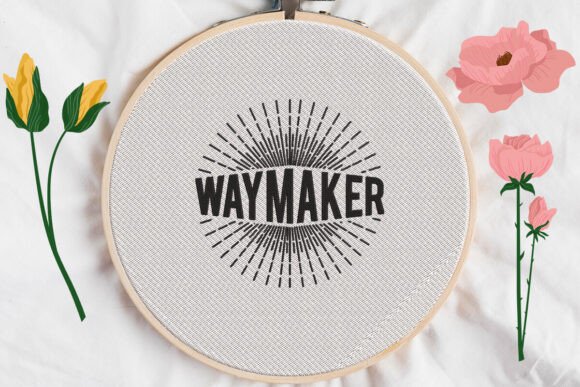
As an embroidery designer who’s prepped over 200 craft fair booths—from snowy Minnesota markets to sun-drenched Southern pop-ups—I’ll say it plainly: Waymaker, Circle Rays, Christian lands with quiet confidence. It’s not loud or cartoonish. It’s not rustic-chic or minimalist-sterile. It’s elegant, with a gentle radiance that reads as both timeless and intentional. The circular rays suggest movement, light, and divine order—no clichéd doves or stained-glass borders needed. And “Waymaker” isn’t tucked away; it’s centered, legible, and spiritually resonant without being preachy. That balance is rare—and highly sellable.
Where It Shines on Craft Fair Products
This machine embroidery design thrives where intention meets utility. On a natural linen tote bag design, the rays expand just enough to anchor the shoulder strap seam while keeping the text crisp at 3.5". On a cotton apron embroidery panel (think bib or pocket), it reads beautifully at 4.25"—large enough to draw eyes across a crowded aisle, small enough to avoid overwhelming the fabric. For tea towel embroidery, the circular symmetry complements folded hems and wooden dowel rods, especially when stitched in cream thread on oat-colored towels.
Embroidered patches are where Waymaker, Circle Rays, Christian becomes unexpectedly versatile. Stitched onto denim jackets, canvas market bags, or even children’s backpacks, it signals quiet faith—not doctrine, but devotion. As a small shop product, it bridges generations: moms buying for teens, grandmas gifting to new graduates, pastors selecting staff appreciation items. On pillow covers and fabric pouches? It elevates everyday handmade goods into giftable keepsakes—especially when paired with soft, high-thread-count cotton or textured chambray.
What Works Online—and What Needs Care
For the Etsy seller or digital embroidery file creator, this design photographs exceptionally well. The radial layout creates natural visual flow in listing images—no awkward cropping, no lost corners. It scales cleanly from thumbnail to full-screen mockup. A printable mockup of Waymaker, Circle Rays, Christian on a cream apron against a marble countertop? Instant warmth, instant trust.
But here’s the real talk: stitch density matters. Those rays aren’t thin lines—they’re layered, graduated fills. On thick fabrics like duck canvas or heavy twill, under-stabilizing will cause puckering. On textured kitchen towels, dense fill areas may flatten the nap unpredictably. And on curved surfaces—like the front of a structured cap—the outer rays can distort if hoop tension isn’t precise. Always test on scrap fabric first. Always.
Practical Production Notes Every Embroiderer Should Know
- Thread colors: Stick to tonal contrast—ivory on charcoal, navy on oat, deep burgundy on cream. Avoid low-contrast combos (e.g., light gray on beige); they mute the radiance.
- Hoop size: Confirm your file includes versions sized for common hoops (4x4, 5x7). If you’re stitching on petite pouches or baby onesies, check whether a reduced version maintains letter clarity—tiny serifs in “Waymaker” can blur below 2.75".
- Stabilizer: Use medium-weight cutaway for stable fabrics (totes, pillow covers) and tear-away + light cutaway hybrid for towels and aprons. Skip basic tear-away alone—it won’t support the ray transitions.
- Fabric texture: Test on your exact tea towel weave. Some terry loops trap dense stitches; others let rays breathe. Adjust top tension slightly if threads look buried.
- Commercial embroidery: Verify licensing before selling finished products. This isn’t just legal—it’s ethical. Your customers are trusting your craftsmanship and your integrity.
Booth Impact: Why Customers Pause, Point, and Purchase
In a sea of glittery quotes and floral monograms, Waymaker, Circle Rays, Christian stands out by standing still—calm, centered, unhurried. At a craft fair, that pause is gold. I’ve watched shoppers stop mid-aisle, tilt their heads, then ask, “What does ‘Waymaker’ mean?” That question opens conversation. That conversation builds connection. And connection converts.
It strengthens brand consistency for makers who curate spiritual-but-sophisticated lines—think curated gift boxes, church bazaars, or women’s ministry shops. It doesn’t scream “Religion”; it whispers “hope.” That nuance makes it appropriate for secular boutiques too, especially those leaning into mindful living or slow craftsmanship.
For handmade product displays, use it consistently across three items: a folded tea towel, a mini embroidered pouch, and a small framed patch. Repetition builds recognition. Clarity builds trust. And when someone picks up that tote bag and feels the smooth stitch relief of the rays? That’s when price becomes secondary to meaning.
Final Designer Verdict: A High-Value, Low-Risk Craft Fair Staple
Waymaker, Circle Rays, Christian isn’t flashy—but it’s faithful to its purpose. It performs across categories, photographs with grace, and carries emotional weight without heaviness. It’s a craft fair product that sells itself through presence, not persuasion.
Before you load it into your embroidery machine: create one real mockup—not digital, not printed, but stitched, pressed, and held in hand. Feel the rhythm of the rays. Read the text from six feet away. Hold it beside your other bestsellers. Does it belong? Does it elevate? Does it feel like something your ideal customer would carry, gift, or keep close?
If yes—you’ve got more than a design. You’ve got a quiet invitation. And in today’s handmade economy, that’s worth every stitch.