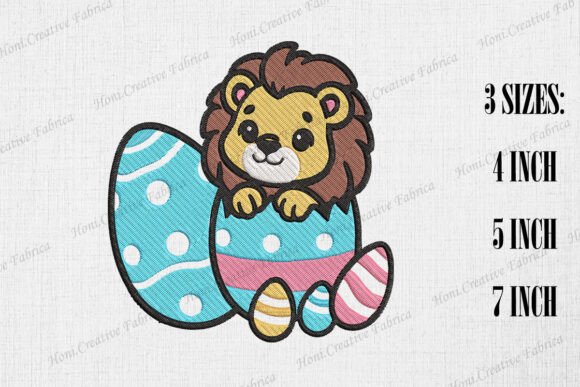
Cute Lion Peeking from Easter Egg
A Practical Review for Small Business Merch & Branded Patches
As an embroidery designer who’s digitized and stitched thousands of designs for cafés, boutiques, pet brands, florists, and Etsy sellers, I approach every new machine embroidery design with two questions: “Does it hold up in real-world business use?” and “Does it strengthen brand identity—not just decorate?” That’s why Cute Lion Peeking from Easter Egg caught my attention. At first glance, the title suggests playful charm—but for small business owners and apparel decorators, charm alone isn’t enough. Let’s break down how this embroidery file performs where it counts: on staff aprons, tote bags, cap fronts, product tags, and customer-facing merchandise.
First Impression: Friendly, Approachable, and Seasonally Smart
Cute Lion Peeking from Easter Egg reads as warm, handmade, and gently whimsical—not cartoonish or overly cutesy. That balance matters. A bakery branding its spring specials, a pet boutique launching Easter-themed collars, or a children’s studio offering custom onesies all need designs that feel intentional, not generic. This lion doesn’t shout—it invites. Its peeking pose adds narrative and softness, making it ideal for businesses that prioritize warmth and care over loud graphics. It leans modern-handmade rather than rustic or vintage, so it pairs well with clean typography, neutral uniforms, and minimalist packaging.
Real-World Performance Across Business Applications
In commercial embroidery, context is everything—and Cute Lion Peeking from Easter Egg shines in specific, high-value placements:
- Embroidered patches: Works beautifully as a 2”–3” woven or chenille-style patch for jackets, totes, or shop signage—its rounded shape and clear silhouette hold detail without overcrowding.
- Apron embroidery: Ideal for upper-left chest placement on cotton or linen aprons. The lion’s compact scale avoids visual weight while adding personality to service staff.
- Cap embroidery: Best suited for structured front panels (not curved bill seams). Test at 2.25” wide to ensure clarity—its open negative space helps readability.
- Tote bag design: Stitches cleanly on canvas, jute, or duck cloth—especially when paired with a subtle monogram or shop name below. Avoid ultra-thin fabrics where stitch density may cause puckering.
- Small business merch: Perfect for limited-run Easter bundles—think branded tea towels, baby onesie sets, or gift tags. It signals seasonal relevance without locking your brand into a single holiday.
It also translates well to printable mockups, letting you preview how Cute Lion Peeking from Easter Egg looks on real product photography before stitching a single thread—a huge time-saver when pitching to local shops or prepping Etsy listings.
Where to Use It Thoughtfully (and Where to Pause)
This design isn’t universally scalable—and that’s okay. As a professional embroiderer, I recommend caution in these scenarios:
- Patch sizes under 1.5”: Fine details like the lion’s eye or egg texture may blur. Always run a test stitch at target size before bulk production.
- Dark or textured fabric: On heavy twill caps or burlap totes, contrast relies heavily on thread color choice. Light gold, cream, or pale yellow threads pop better than white on charcoal.
- Frequent-wash items: Baby onesies and kitchen towels demand tight stitch density and proper stabilizer. Confirm the embroidery file uses satin and fill stitches efficiently—not excessive underlay or dense fills that stiffen fabric.
- Curved surfaces: Avoid placing near gussets, sleeve cuffs, or deep pockets unless you’ve tested hooping stability and fabric stretch.
How It Shapes Brand Identity & Customer Trust
For small businesses, every embroidered detail communicates values. Cute Lion Peeking from Easter Egg subtly reinforces approachability, craftsmanship, and seasonal thoughtfulness—qualities customers associate with trusted local brands. Unlike mass-produced clipart, this design feels curated. When stitched on a barista’s apron or a florist’s tote, it tells clients: “We pay attention to detail. We invest in quality. We celebrate moments meaningfully.” That builds recognition faster than a generic logo—and encourages social sharing, especially on platforms like Instagram where handmade charm thrives.
Importantly, it supports visual consistency across touchpoints. Pair it with a simple sans-serif font for tags or receipts, and you’ve got a cohesive system: no clashing motifs, no tonal whiplash between digital and physical assets. That consistency makes your design assets work harder—whether you’re selling on Etsy, restocking at a craft fair, or outfitting a team.
Essential Embroidery Designer Notes Before Production
Before sending Cute Lion Peeking from Easter Egg to your machine or client, here’s my checklist:
- Test in black and white first—to assess contrast, spacing, and balance without color distraction.
- Verify small-patch viability: Resize to 1.75” and check if outlines remain crisp and interior details legible.
- Review thread color contrast on your target fabric—especially for dark uniforms or textured linens.
- Inspect spacing between lion and egg: Tight gaps can close up during stitching; confirm they’re ≥0.8mm apart in the embroidery file.
- Confirm hoop size compatibility—some versions may require a 4”x4” hoop minimum. Check file specs before digitizing adjustments.
- Test on real fabric + stabilizer combo—a lightweight tear-away works for cotton tees, but mid-weight cut-away is safer for knits or towels.
- Create a client-approved mockup—use it for quotes, social previews, or wholesale pitch decks.
- Compare beside existing design assets: Does it harmonize with your current logo, palette, and tone—or does it clash?
- Confirm commercial licensing: Since this is intended for small business merch, custom apparel, and commercial embroidery, verify the digital embroidery file includes rights for resale and branding use.
Remember: Cute Lion Peeking from Easter Egg isn’t just a seasonal decoration—it’s a versatile, brand-forward tool. Used intentionally, it elevates aprons into ambassadors, turns tote bags into walking billboards, and transforms everyday merchandise into memorable handmade products. For embroidery shops and creative small businesses, that’s not just smart stitching—it’s strategic storytelling, one stitch at a time.