Cherry and Coquette Bow
First Impression: Vintage Charm with Quiet Confidence
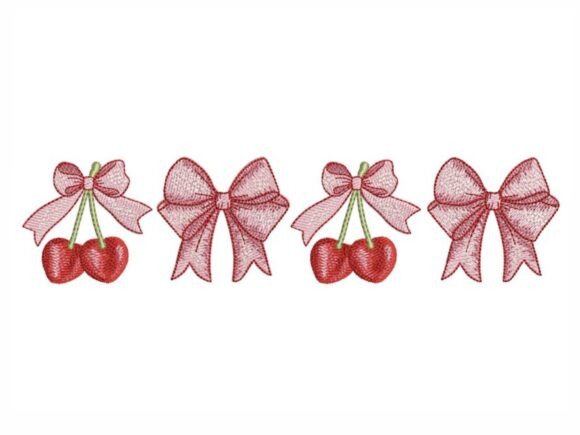
As an embroidery designer who’s prepped over 200 craft fair booths, I can tell you Cherry and Coquette Bow lands exactly where it should — soft, intentional, and unmistakably romantic without tipping into cliché. It’s not loud or cartoonish; it’s not minimalist or stark. It’s vintage-inspired, yes — but with modern wearability. The cherries read as sweet and timeless, not kitschy. The coquette bow adds a whisper of flirtation and delicacy, elevating the whole composition beyond basic fruit motifs. At a glance, customers register it as “thoughtful,” “handmade,” and “giftable” — especially for Valentine S Day shoppers seeking something warmer than hearts and more distinctive than roses.
Where Cherry and Coquette Bow Shines on Craft Fair Products
This design thrives where charm meets utility. On a natural linen tote bag? Perfect — centered above the pocket or subtly off-center near the seam, it reads as elevated yet approachable. On an apron? Ideal for the bib or lower corner — the bow’s curve echoes waist ties, and the cherries add just enough visual interest without overwhelming function. For tea towel embroidery, place it in the lower third: the soft scale keeps it legible against textured cotton, and the vintage tone pairs beautifully with farmhouse and cottagecore kitchen aesthetics.
Cherry and Coquette Bow also works exceptionally well as an embroidered patch — small (3–4 inches), clean-edged, and rich in detail. Patches sell fast at craft fairs because they’re affordable impulse buys and easy to display on a corkboard or fabric swatch wall. As a cap front design? Use caution — the bow’s fine loops and cherry stems may lose definition on curved, thick denim or twill unless digitized with generous underlay and reduced density. Better suited for structured trucker caps or lightweight cotton visors.
On pillow covers and small fabric pouches, Cherry and Coquette Bow becomes a signature touch — intimate, refined, and quietly luxurious. It signals care in curation, not mass production. And for handmade gifts like monogrammed gift sets (tea towel + pouch + recipe card), this design unifies the collection with consistent mood and craftsmanship.
Real-World Production & Selling Considerations
Cherry and Coquette Bow is instantly legible at 3.5 inches wide — no squinting, no confusion. That makes it ideal for booth samples: customers recognize the motif before you even speak. It scales cleanly up to 6 inches for larger items (market bags, pillow fronts) and holds integrity down to 2.75 inches for patches and pouches — but go smaller only if your digitizing includes optimized underlay and simplified stem details.
Photography is a strong suit. The contrast between glossy cherry highlights and matte bow texture creates natural depth — no heavy editing needed for Etsy listings. Pair it with muted backdrops (oatmeal linen, sage green wool, weathered wood) to let the design breathe. Avoid busy patterns behind it; this motif earns attention by being serene, not competing.
Batch production is smooth — provided stitch density stays moderate. Dense fills in the cherry highlights or bow knots can cause thread breaks or puckering on lightweight fabrics. Always test on scrap fabric that matches your final product’s weight and weave. And yes — check your commercial embroidery license before selling finished products. Cherry and Coquette Bow is a digital embroidery file meant for makers, not just personal use.
Careful-Use Notes Every Designer Should Know
- Dense stitch areas: Watch the cherry highlights and bow center knot — high-density satin or fill can sink into terry cloth towels or pile fabrics. Reduce density or switch to tatami fill for better lift.
- Tiny details: The bow’s ribbon ends and cherry stems are delicate. Avoid shrinking below 2.5 inches unless the file has been explicitly optimized for small-scale stitching.
- Textured towels: Use cutaway stabilizer + light tear-away top layer. Skip iron-on film — it flattens dimension and dulls thread sheen.
- Curved cap surfaces: Hoop with adhesive stabilizer and baste first. Test placement on a cap blank — the bow’s symmetry can warp if hooped too tightly.
- Dark fabric: Choose high-contrast thread colors — cream or blush pink for the bow, deep burgundy or black for stems. Avoid light red thread on navy; it fades visually.
Why This Design Strengthens Your Booth & Brand
Cherry and Coquette Bow doesn’t shout — it invites. That’s gold at a craft fair, where sensory overload is real. It draws the *right* kind of attention: slower, more considered, often from buyers who linger, ask questions, and purchase multiple items. It reinforces perceived handmade quality through its balance of detail and restraint — no sloppy jumps, no over-digitized flashiness.
For Etsy sellers and small shop owners, it supports brand consistency across categories: same motif on a tea towel, a patch, and a pouch tells a cohesive story. It fits naturally into Valentine S Day collections without feeling seasonal-only — cherries and bows carry year-round appeal in home, apparel, and gift markets.
Most importantly, Cherry and Coquette Bow feels repeatable. You can offer it in three thread palettes (vintage red/cream, berry/black, sage/ivory) and still maintain instant recognition. That versatility means fewer design decisions per product launch — and more time spent stitching, selling, and connecting with customers.
Final Designer Checklist Before You Stitch
- Test Cherry and Coquette Bow on scrap fabric matching your final product’s weight, stretch, and texture.
- Verify thread color contrast — especially on dark or printed bases.
- Review spacing between cherries and bow elements — tight gaps risk skipped stitches or thread nesting.
- Confirm hoop size compatibility with your machine and intended product (e.g., cap frames vs. standard hoops).
- Inspect stitch density — adjust if needed for fabric type (lightweight = less fill, heavyweight = more underlay).
- Choose stabilizer intentionally: cutaway for knits, tear-away for stable wovens, adhesive + topping for towels.
- Create at least one real mockup — photograph it in natural light, not just rely on printable mockups.
- Compare how Cherry and Coquette Bow looks across 2–3 fabric colors — what lifts the bow? What makes the cherries pop?
- Double-check commercial licensing terms — this is a digital embroidery file intended for resale of finished handmade products, not redistribution of the file itself.